

Psychology Behind PR Crises Masterclass
-
96%
of crises spread internationally within 24 hours. (Avaans)
-
2 hrs.
Responding to crises under this time improves customer sentiment by 61%. (Avaans)
-
75%
of customers expect a corporate response within 24 hours. (Sprout Social)
-
84%
of comms leader say C-suite executives have sought their counsel more in 2026 than previously. (Cision)
Most crisis training teaches tactics. This masterclass teaches the psychology underneath them.
Every PR and communications professional has sat through training on messaging frameworks, media protocols, and response timelines. What's missing is the "why:" why some organizations rebuild trust within weeks, while others never fully recover, even when they followed the same playbook. The difference isn't tactics. It's the psychology of how trust breaks and how it's rebuilt.
This course draws on frameworks from the facilitator’s own research and published book, Managing Brand Crises: A Guide to Navigating the Storm, included free ($37.99 USD value as of August 2026) for all participants who register and attend the live session.
This is the only live masterclass session anywhere in the world that explores the behavioral science behind brand and PR crises, their formation, and how companies should respond strategically based on consumer behavior and psychology.
-
Date
Monday, October 5, 2026
-
Time
1:00 to 2:30 pm (Toronto/NY Eastern Standard Time)
-
Format
Held online via videoconferencing
-
Cost
$349 CAD (or in equivalent currency); includes free physical copy of Managing Brand Crises
-
Registration Deadline
Monday, September 28, 2026
What you’ll learn.
-
Why "message control" often backfires, and what actually restores trust with stakeholder.
-
A behavioral science lens for diagnosing a crisis in real time, not just responding to it after the fact.
-
Two contrasting case studies showing why the same crisis response can succeed in one context and fail in another.
-
A live, applied exercise using a real diagnostic lens you can bring back to your own organization.
-
What the 90 minutes look like.
A reframed case study: A well-known "PR failure" revisited through a psychological lens, not a messaging one.
The core problem, named: Why most crisis response optimizes for control instead of trust, and why that distinction matters.
A diagnostic framework, in action: A five-part lens for reading a crisis in real time, grounded in behavioral science rather than tactics.
An applied moment: You'll work through a real or composite scenario live, using the framework yourself.
A contrasting case study: A crisis handled well, showing the framework predicts outcomes, not just explains them afterward.
What changes when you apply this: A clear takeaway on how this shifts what your team actually does differently, next time.
Live Q&A: Bring your own questions or scenarios to the group.
-
Built for PR, communications, and marketing leaders.
This session is designed for PR and communications professionals, marketing officers, and anyone responsible for protecting an organization's reputation under pressure. No prior background in psychology or behavioral science is required.
-
What's included?
90 minutes live with Dr. Chan, plus live Q&A.
A free physical copy of Managing Brand Crises: A Guide to Navigating the Storm, mailed to attendees who join live (not available to those who register but do not attend).
Applied diagnostic exercise you can use immediately.
Trusted by leading business schools.







Your facilitator.

Eugene Chan, PhD
Eugene (PhD Toronto; MA Chicago; AB Michigan) is a marketing professor and behavioral scientist whose work focuses on the moments when customers are uncertain, skeptical, or under scrutiny, translating insights from consumer psychology into practical strategies that strengthen confidence, reduce friction, and improve adoption across products, services, and communication. His academic work is published in Financial Times Top 50 journals and has been covered by media outlets including the Australian Financial Review, Globe and Mail, and Wall Street Journal.
He has conducted workshops and masterclasses including executive education for leading universities and companies in Canada, Australia, Europe, Asia, and the United States, and has served on or is serving on tenured faculties at Tyndale University, Toronto Metropolitan University, Purdue University, Monash University, and the University of Technology Sydney.
What previous participants thought.
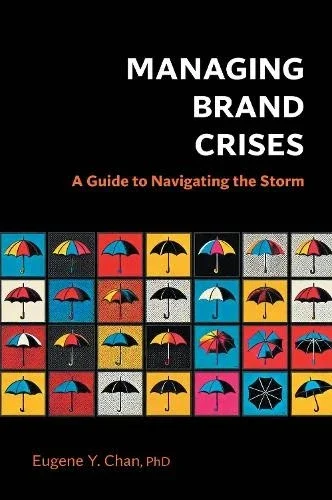
Managing Brand Crises: A Guide to Navigating the Storm
Business Expert Press, 2025
In today’s fast-paced digital world, brand crises are no longer a question of “if” but “when.” With the power of social media amplifying every misstep, a poorly timed campaign, a product recall, or a public relations blunder can quickly spiral out of control, jeopardizing a brand’s reputation and financial future. Managing Brand Crises: A Guide to Navigating the Storm equips brand managers, PR professionals, and business leaders with the tools they need to weather the storm and emerge stronger.
This insightful guide explores the critical skills required to anticipate potential pitfalls, respond swiftly and transparently, and rebuild consumer trust. From mastering stakeholder engagement to crafting strategies for reputation recovery, this book provides actionable steps for transforming crises into opportunities for growth and innovation. Packed with real-world examples and expert advice, it demonstrates that with the right preparation and response, crises can become defining moments that strengthen a brand’s identity.
Whether you’re a seasoned professional or new to the field, Managing Brand Crises is an essential resource for navigating the challenges of today’s high-stakes marketplace. Learn how to stay ahead of the curve, safeguard your brand, and turn moments of adversity into opportunities for success.
Got questions? We got answers.
-
This is a live-only session. The book is reserved for attendees who join live; there is no replay or recording provided afterward.
-
No. This session stands on its own and does not assume you've read the book.
-
Because the book ships only to attendees who join the live session, we're unable to send it to registrants who don't attend.
-
You'll be asked for a mailing address at registration; the book ships after the session to all live attendees, anywhere in the world.