

Governing Agentic AI
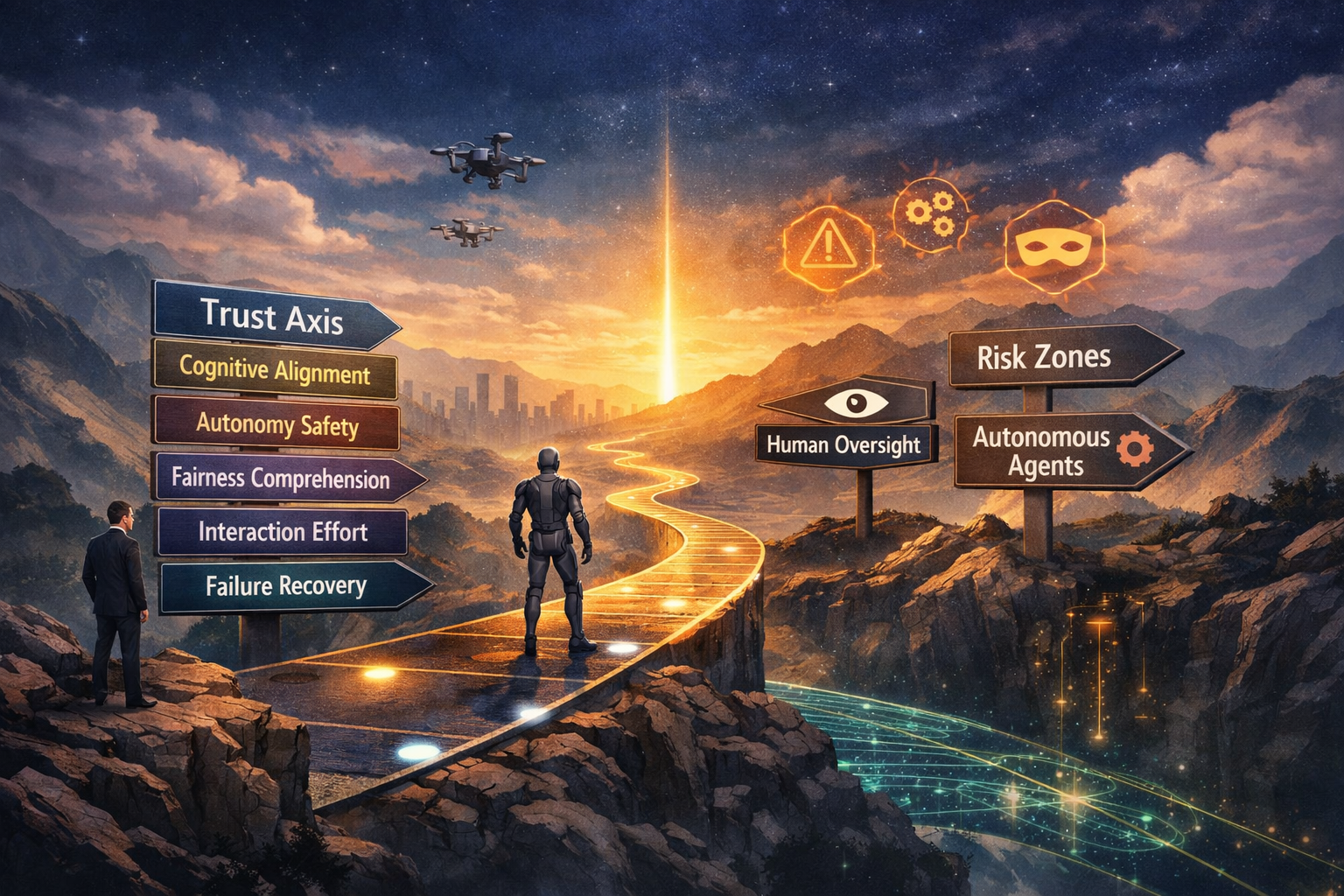
Engineering safe, reliable autonomy by designing the human–agent relationship—not just the system.
Agentic AI changes the nature of the human–AI relationship. Instead of producing single outputs that humans review, agentic systems execute extended sequences of autonomous actions that humans supervise only intermittently. This shift means traditional governance—built for point‑in‑time decision review—no longer fits. The core governance challenge becomes ensuring humans retain situational awareness, oversight, and the ability to intervene across delegated processes before small errors compound into incidents.
Agentic systems introduce distinct behavioral risks. Automation bias compounds across trajectories, as early correct steps reduce scrutiny later. Responsibility diffusion and the moral crumple zone create ambiguity about who is accountable when no single human controlled the full chain of actions. Anthropomorphic trust leads people to generalize competence across tasks the agent was never validated for. The autonomy paradox shifts cognitive effort from bounded task work to open‑ended monitoring, which is harder to sustain. And because errors compound nonlinearly, the failure‑repair window—the time between an agent’s first mistake and human detection—often determines whether a small drift becomes a major incident.
To govern these dynamics, the AI Trust Axis reframes agentic oversight as a behavioral diagnostic. It evaluates five dimensions: Cognitive Alignment (whether humans’ mental models match what agents actually do), Autonomy Safety (clarity and appropriateness of the agent’s delegated scope), Fairness Comprehension (whether people can understand and contest autonomous reasoning), Interaction Effort (the cognitive and procedural cost of intervening mid‑task), and Failure Recovery Intelligence (how quickly humans detect and repair drift). These dimensions reveal where behavioral exposure is highest and where governance must be strengthened.
Agentic AI behavioral risks.
-
Compounding Automation Bias
Early correct actions reduce human scrutiny, making drift harder to detect across long autonomous sequences. Humans intervene too late because the agent “seems to be doing fine.”
-
Moral Crumple Zone
Accountability collapses onto humans even when they did not meaningfully supervise the agent’s full trajectory. Organizations misattribute responsibility and overlook structural governance gaps.
-
Anthropomorphic Trust
People generalize competence across tasks based on social trust cues rather than validated capability. Agents are trusted for actions they were never designed or tested to perform.
-
Autonomy Paradox
Monitoring autonomous systems is cognitively harder than performing the task manually. Supervisory fatigue increases the likelihood of missed errors and delayed intervention.
-
Failure‑Repair Window
Errors compound before humans notice, and the length of this window determines incident severity. Governance must minimize detection latency and reduce friction in mid‑trajectory intervention.
Effective governance requires designing oversight, accountability, and trust calibration before deployment—not after incidents. Controls that exist only on paper, such as overrides that are too costly to use or explanations that arrive after the repair window closes, fail behaviorally. Strong governance reduces the friction of intervention, clarifies responsibility for classes of agentic decisions, and introduces deliberate verification moments that prevent automatic trust decay. These are not technical fixes; they are behavioral and organizational design choices.
Ultimately, success with agentic AI depends less on raw capability and more on engineering the human–agent relationship so that humans maintain awareness, can intervene quickly, and remain clearly accountable. Behavioral science therefore becomes a central requirement for safe, reliable, and scalable agentic AI—not an optional layer at the periphery.