

Behavioral Science in AI Adoption Masterclass
-
95%
of GenAI pilots deliver 0 return on investment. (MIT)
-
98%
of organizations have employees engaging in shadow AI. (Verizon)
-
EU-
recognized expert in the field of behavioral science as applied to AI adoption, branding, and marketing. (EPRS/EVAL/SER/25/008CEI)
-
>97%
of previous participants in masterclasses, workshops, and executive education recommend the instructor to others.
Most AI rollouts don't fail the way people think.
According to MIT's 2025 research on enterprise AI, 95% of generative AI pilots deliver no measurable financial return, not because the tools are weak, but because adoption is a behavior-change problem, not a technology problem. Meanwhile, by 2026, an estimated 98% percent of organizations have employees using AI tools that were never officially sanctioned, and Verizon's 2026 Data Breach Investigations Report found shadow AI detections rising fourfold in a single year.
These two facts describe the same underlying story from opposite ends. People don't reject AI. They reject the version of it that was handed to them without any attention to how humans actually change behavior, and even when a rollout appears to succeed, the failure modes that matter most stay hidden precisely because they don't trip any alarm.
This masterclass covers both halves: why adoption fails at the outset, and why it can fail again, quietly, well after everyone has stopped watching.
-
Date
Monday, September 21, 2026
-
Time
1:00 to 2:30 pm (Toronto/NY Eastern Standard Time)
-
Format
Held online via videoconferencing
-
Cost
$249 CAD (or in equivalent currency)
-
Registration Deadline
Extended until Sunday September 20, 2026!
What you’ll learn.
-
Why Adoption Fails
Before a tool is even in daily use, it runs into predictable psychological resistance. You'll learn to name the exact force behind a stalled rollout, rather than defaulting to “change is hard.”
-
Why It Fails Again, After It "Worked"
Passing every adoption metric doesn't mean the underlying behavior is correct. You'll learn to spot three hidden failure modes that look like compliance from the outside.
-
One Unified Diagnostic Sequence
The session closes by combining both halves into a single sequence you can run against any AI rollout, live or in retrospect, to determine whether it's an adoption problem, a drift problem, or both, and exactly where to intervene.
-
What the 90 minutes look like.
Opening (5 min): The adoption paradox, framed through the MIT and Verizon data.
Part 1: Why Adoption Fails (30 min): Resistance, trust calibration, and environmental design.
Part 2: Why It Fails Again (35 min): Shadow AI use, performative HITL review, and failure to escalate.
Live diagnostic (10 min): A short, guided exercise applying the unified sequence to a rollout you bring to the session.
Part 3: Bringing It Together (5 min): The single diagnostic lens.
Live Q&A (5 min)
-
Built for people accountable for AI adoption, not just AI strategy.
This masterclass is for team leads, managers, innovation leads, and compliance or risk owners who are responsible for AI adoption succeeding, whether that means getting a stalled rollout moving or making sure a rollout that looks successful actually is. No prior background in behavioral science is required. What’s useful is a real team, a real tool, and a willingness to look honestly at what's actually happening, rather than what the rollout deck said would happen.
Not just concepts, but a starting diagnosis.
-
A first-pass diagnosis of your own rollout: which resistance force, which trust failure, and which drift pattern, if any, is present.
-
The session closes by combining both halves into a single sequence you can run against any AI rollout, live or in retrospect, to determine whether it's an adoption problem, a drift problem, or both, and exactly where to intervene.
-
A clear next step into whichever full course matches what you diagnosed live.
Trusted by leading business schools.








Your facilitator.
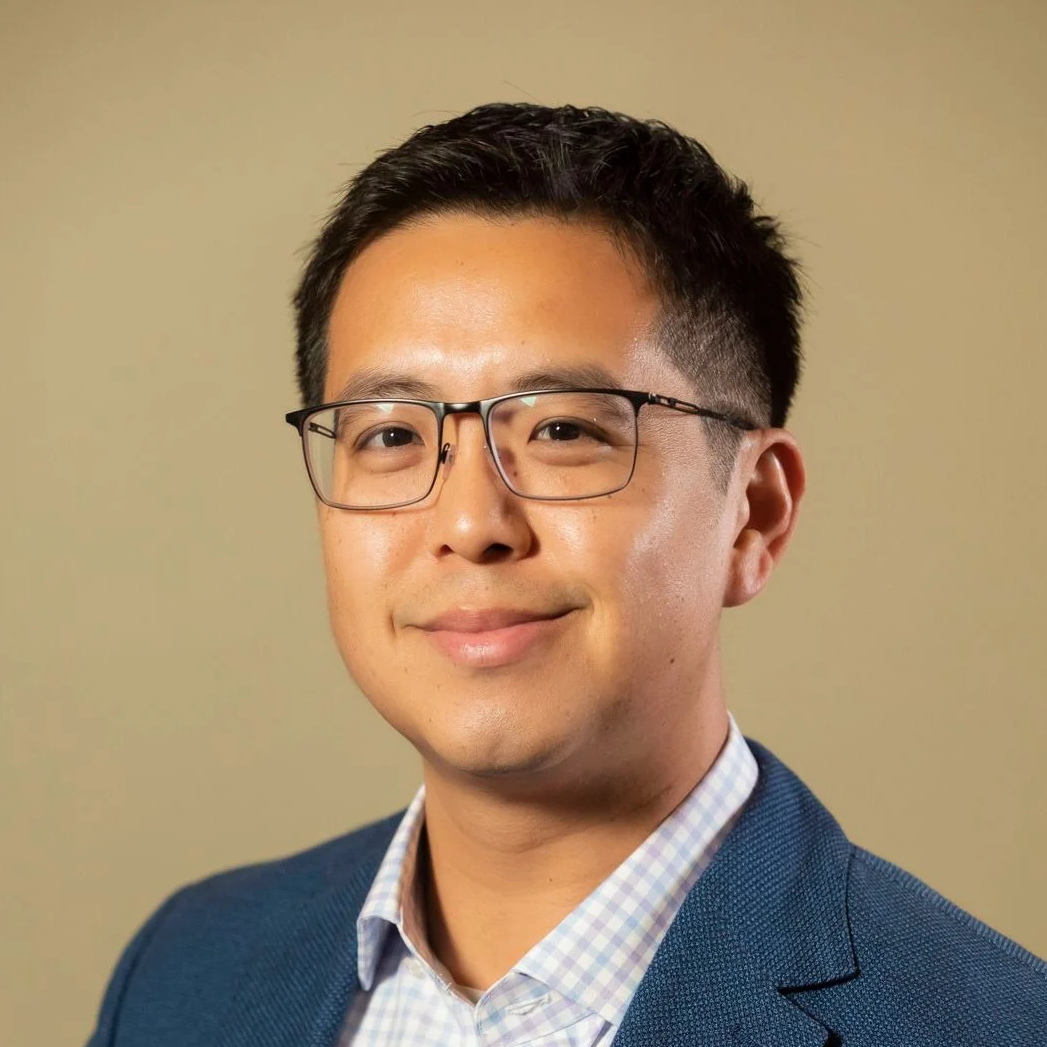
Eugene Chan, PhD
Eugene (PhD Toronto; MA Chicago; AB Michigan) is a marketing professor and behavioral scientist whose work focuses on the moments when customers are uncertain, skeptical, or under scrutiny, translating insights from consumer psychology into practical strategies that strengthen confidence, reduce friction, and improve adoption across products, services, and communication. His academic work is published in Financial Times Top 50 journals and has been covered by media outlets including the Australian Financial Review, Globe and Mail, and Wall Street Journal.
He has conducted workshops and masterclasses including executive education for leading universities and companies in Canada, Australia, Europe, Asia, and the United States, and has served on or is serving on tenured faculties at Tyndale University, Toronto Metropolitan University, Purdue University, Monash University, and the University of Technology Sydney.
What previous participants thought.
Got questions? We got answers.
-
No. This masterclass is a condensed, live introduction to ideas covered in much greater depth across two full self-paced courses, Behavioral Science of AI Adoption and Behavioral Drift. Attendees will get a clear path to both at the close of the session.
-
This is a live-only session. There is no replay or recording provided afterward.
-
It helps to have a specific AI rollout in mind, your own or one you've observed, since the live diagnostic exercise applies directly to a real example.
-
Yes. No prior behavioral science background is required.