
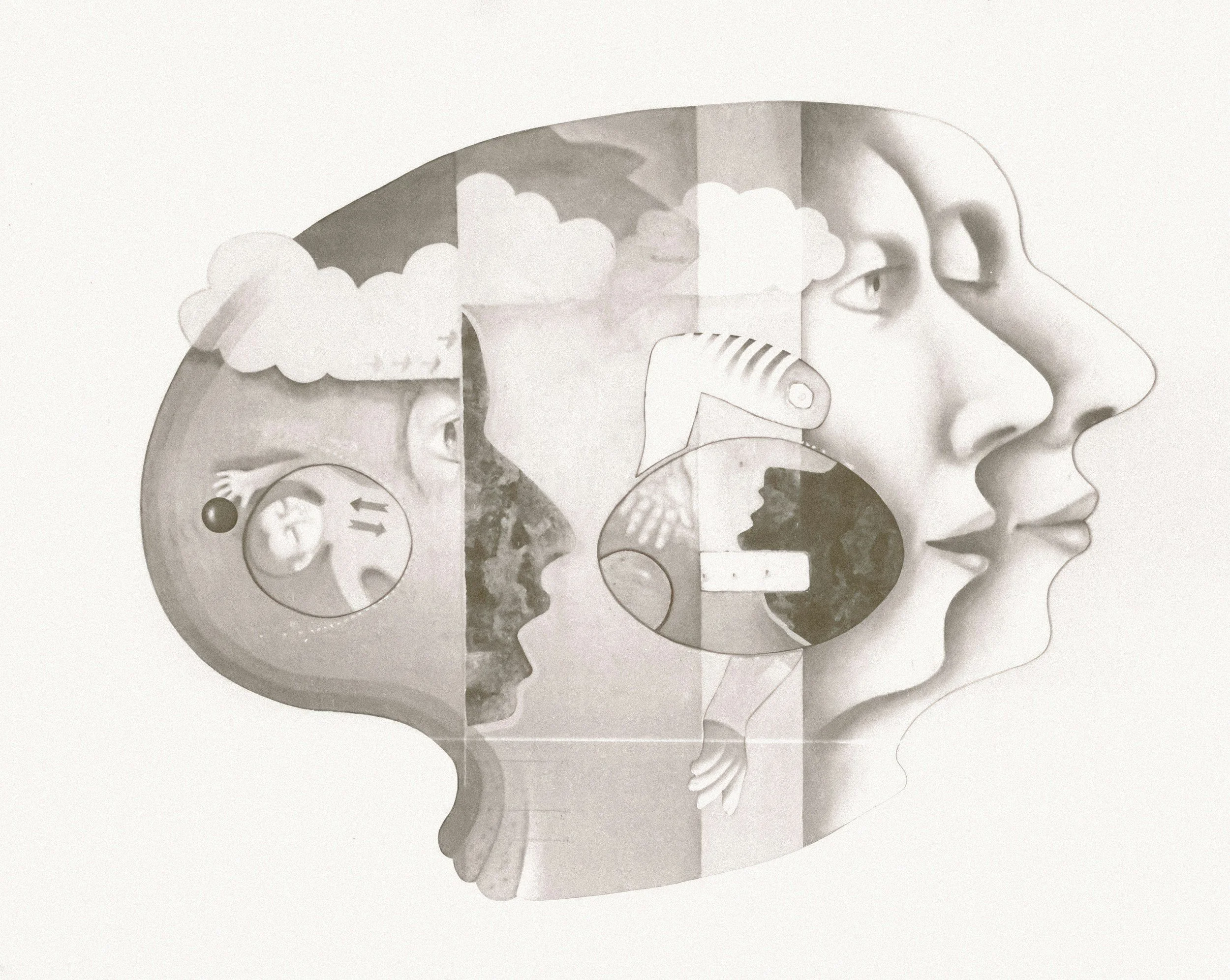
Behavioral Science
The premise of behavioral science is that human behavior and decision-making are irrational.
Human behaviour isn’t driven by rules or rational calculation but by fast, automatic processes shaped by cognitive shortcuts, social cues, emotions, workload, and environmental design. People act based on what feels right, what others model, and what interfaces nudge—not what policies prescribe. Behavioral science makes these hidden drivers visible, giving leaders practical ways to strengthen trust, improve AI adoption, protect brands, and build better customer relationships by designing for how people actually think and behave.
Major behavioral science findings.
-
Cognitive Biases
People do not always make decisions through purely rational analysis. Cognitive biases reveal the predictable mental shortcuts that shape judgments, choices, and perceptions.
-
Nudging
Small changes in how choices are presented can influence behavior while preserving individual freedom. Nudges help organizations design environments that make desired actions easier and more intuitive.
-
Dual-Process Theory
Human thinking involves both fast, intuitive processes and slower, analytical processes. Understanding when people rely on each helps organizations design better decisions and experiences.
-
Prospect Theory
People evaluate gains and losses differently, often placing greater weight on potential losses. This helps explain risk perception, resistance to change, and responses to uncertainty.
-
Social Proof
People look to others when deciding what to believe or do, especially in situations involving uncertainty. Social influence plays a critical role in trust, adoption, and reputation.
-
Herding & Social Influence
People are influenced by the behaviors and opinions of others. These dynamics shape adoption, loyalty, organizational culture, and collective decision-making.
-
Choice Architecture
The way options are structured can significantly shape decisions. Designing better choice environments helps organizations improve experiences and outcomes.
-
Mental Models
People interpret the world through existing beliefs and expectations. Understanding mental models helps organizations create clearer communication and more intuitive experiences.

-
Behavioral science is the study of how people actually think, make decisions, and behave. Drawing from psychology, economics, sociology, and related fields, it examines the cognitive, emotional, social, and environmental factors that influence human behaviour. Rather than assuming people always make perfectly rational decisions, behavioral science helps us understand the predictable patterns that shape real-world choices.
-
Behavioral science has shown that people are not always the rational decision-makers traditional models assumed. However, our behaviour is not random—it follows predictable patterns. People are influenced by mental shortcuts, emotions, habits, social context, incentives, and the way choices are presented. Understanding these patterns allows organizations to better predict behaviour and design more effective solutions.
-
Research has revealed that small changes in context can significantly influence behaviour, that people often struggle to translate intentions into actions, and that trust, fairness, and emotions play a major role in decision-making. These discoveries demonstrate that behaviour is shaped not only by what people know or believe, but also by the environments and systems in which they make choices.
-
Many organizational challenges are ultimately behavioural challenges. Whether encouraging AI adoption, building customer loyalty, or responding to a brand crisis, success depends on understanding how people think and act. Behavioral science helps organizations move beyond assumptions by providing evidence-based insights into the psychological factors that influence trust, engagement, and decision-making.
-
Behavieural applies behavioral science to help organizations better understand and influence human behaviour. We use behavioral insights to address challenges such as AI adoption, brand trust, customer loyalty, and organizational change—helping organizations design experiences, strategies, and systems that align with how people actually think and behave.
-
AI Adoption
People often resist AI not because the technology is flawed but because it threatens psychological needs—control, competence, and certainty. Behavioral science shows that loss aversion makes employees overweight the possibility of failure, even when AI improves accuracy. Automation aversion and trust asymmetry mean one visible mistake can outweigh dozens of correct outputs, creating a perception that AI is unreliable. These reactions feel irrational from a technical standpoint but are predictable once you understand how humans judge risk.
Adoption also depends on cognitive effort. If an AI tool increases cognitive load, disrupts routines, or feels harder to use—even slightly—people reject it regardless of objective benefits. Familiar workflows feel safer because they reduce uncertainty, and humans prefer “good enough and known” over “better but unfamiliar.” Behavioral science reframes resistance not as stubbornness but as a natural response to perceived risk, effort, and ambiguity.
-
Branding & Brand Crises
Brand perception is shaped by fast, emotional judgments rather than rational evaluation. In a crisis, availability bias makes vivid negative events disproportionately influential, while halo/horns effects cause one incident to color the entire brand. People respond to perceived moral violations through moral outrage heuristics, which amplify emotional reactions far beyond the factual severity of the event. This is why small missteps can trigger large reputational damage.
Crises escalate socially because people look to others for cues. Social proof accelerates outrage, and identity-based brands face stronger backlash because consumers feel personally betrayed. Behavioral science explains why crisis response must prioritize trust repair—swift action, transparency, and ownership—rather than purely factual rebuttals. People judge brands through emotion, values, and social context, not through rational cost–benefit analysis.
-
Customer Loyalty
Loyalty rarely comes from rational value calculations; it comes from psychological investment. The endowment effect makes customers overvalue points, status, and progress they’ve already earned, while the goal-gradient effect increases motivation as people get closer to a reward. Even when alternatives are objectively better, status quo bias keeps customers from switching because staying feels easier and safer.
Loyalty programs also leverage effort justification and reciprocity. When customers invest time or money into earning rewards, they feel more committed to the brand. Small perks—exclusive access, early upgrades, personalized offers—create a sense of obligation to “give back” through continued purchases. Behavioral science shows that loyalty is less about economics and more about identity, progress, and emotional reinforcement, which is why “irrational” loyalty is entirely predictable.