

Online Learning
-
PhD-
credentialled from the Rotman School of Management, University of Toronto, for the instructor.
-
EU-
recognized expert in the field of behavioral science as applied to AI adoption, branding, and marketing. (EPRS/EVAL/SER/25/008CEI)
-
18+
years of experience in actually applying academic research to solving industry and policy trust challenges.
-
>97%
of previous participants in masterclasses, workshops, and executive education recommend the instructor to others.
Trusted by leading business schools.











Behavioral science × AI adoption series.
-
Behavioral Drift
Argues that AI adoption can look successful on every dashboard metric while failing invisibly: shadow AI use, performative human-in-the-loop review, and silent failure-to-escalate. It frames all three as instances of one mechanism—hidden cost plus invisibility—and gives each a diagnose-then-design treatment, closing with a single diagnostic sequence and a personal Behavioral Drift Audit.
-
Behavioral Science of AI Adoption
Reframes AI rollout failure as a behavior-change problem, not a technology problem, built on evidence that most generative AI pilots fail to show returns despite employees adopting unsanctioned tools on their own. It moves from diagnosis (the stated-revealed gap, loss/ambiguity/identity-threat resistance, two-directional trust miscalibration) to design (manager-level psychological safety, the EAST framework, implementation intentions), closing with a four-question diagnostic sequence and a Personal Adoption Diagnosis and Action Plan.
-
Behavioral Science of AI Governance
Treats board- and committee-level AI governance failure as a behavioral problem rather than a paperwork gap, citing survey data on boards' weak AI oversight and governance knowledge. It diagnoses approval bias, escalation of commitment, the incentive gap in escalation/whistleblowing, and diffused ownership (using Boeing's board as a case), then designs evidence-based approval processes, kill criteria, protected reporting paths, and named decision ownership—closing the three-course arc (person → team → organization) with a Governance Audit.
Marketing science series.
-
Behavioral Pricing
Teaches pricing and marketing practitioners how consumers actually experience price through System 1, fast, automatic judgment rather than careful comparison. It covers reference pricing, anchoring, framing/defaults, the decoy effect, odd pricing, and payment friction, using real brand cases (McDonald’s, Amazon, Starbucks) and builds toward a one-page Behavioral Pricing Playbook, with explicit ethical guardrails against manipulative use.
-
Emotional Marketing
Examines how consumers decide through a fast, automatic emotional read (the “experiential system”) rather than rational comparison, covering the emotional spectrum, nostalgia, brand attachment, narrative, and fear/scarcity appeals. Using cases like Coca-Cola, Volvo, and Amazon, it builds toward a one-page Emotional Marketing Playbook for the learner's own brand, product, or campaign.
-
Luxury Consumer Behavior
Explores why consumers pay premiums no functional benefit can justify, grounded in status-signaling theory, social identity theory, and luxury/prestige research (the Brand Luxury Index, the rarity principle). Using cases like Patek Philippe, Rolex, Hermès, and Louis Vuitton, it builds toward a one-page Luxury Positioning Playbook for the learner's own brand, product line, or client.
Executive education series.
-
Psychology of Brand & PR Crises
Teaches comms and brand leaders the psychology behind why consumers panic, blame, forgive, or abandon a brand in crisis. Grounded in attribution theory, fear/anxiety neuroscience, situational crisis communication theory, and apology research, it walks through documented cases (Tylenol, Starbucks, Domino’s) and builds toward a one-page Crisis Response Playbook. It teaches the underlying psychology rather than a proprietary framework, so practitioners can apply it to whatever process they already use.
Why Behavieural Academy?
-
The Only Course Library Built by a PhD Who Still Teaches
Most behavioral science content online comes from practitioners with a certificate, a master’s, or a strong LinkedIn following—but not a doctorate, and not actual experience in a university classroom. This library is built by a PhD-credentialled academic with an active faculty position, who teaches this material to MBA and executive students before it ever becomes a course.
-
Named Theories; Zero Recycled Advice
Every course is built on named, citable research—attribution theory, loss aversion, the decoy effect, escalation of commitment, social identity theory, and dozens more—so you're not just learning a tactic, you're learning why it works and how to defend it in a room.
-
Real Brands; Zero Hypotheticals
Every concept in this library is grounded in a documented, named case—Johnson & Johnson, Starbucks, Domino’s, Volkswagen, Boeing, Hermès, Coca-Cola, and more—not a generic “Company A” example. You leave with cases you can cite by name in front of a client or a board.
-
Built to Build Trust, Not Exploit It
Every course includes an explicit ethical-use module—where the line is between influence and manipulation, and when a tactic that works will still cost you your customer’s trust. This isn’t a course library that teaches you how to trick people. It's one that teaches you how to be persuasive without being predatory.
What previous participants thought.
Your instructor.

Eugene Chan, PhD
Eugene (PhD Toronto; MA Chicago; AB Michigan) is a behavioral scientist whose work focuses on the moments when customers are uncertain, skeptical, or under scrutiny, translating insights from consumer psychology into practical strategies that strengthen confidence, reduce friction, and improve adoption across products, services, and communication. His academic work is published in Financial Times Top 50 journals and has been covered by media outlets including the Australian Financial Review, Globe and Mail, and Wall Street Journal.
He has conducted workshops and masterclasses including executive education for leading universities and companies in Canada, Australia, Europe, Asia, and the United States, and has served on or is serving on tenured faculties at Tyndale University, Toronto Metropolitan University, Purdue University, Monash University, and the University of Technology Sydney.
Books & publications by the instructor.
-
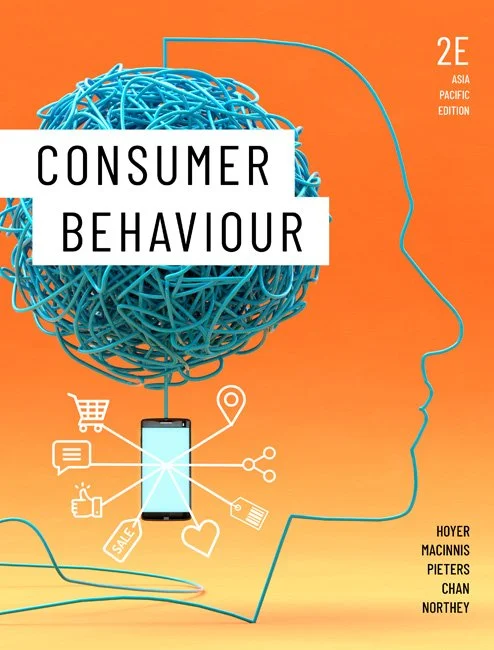
Consumer Behaviour: Asia-Pacific Edition
Cengage Learning, 2024
Co-authored with Wayne Hoyer, Deborah MacInnis, Rik Pieters, and Gavin Northey, this textbook adapts leading consumer behavior theory to the Australia and New Zealand context. Combining academic research with regional case studies and contemporary marketing examples, it explores the psychological, cultural, and technological factors shaping consumer decision-making while bridging behavioral science with real-world marketing practice.
-
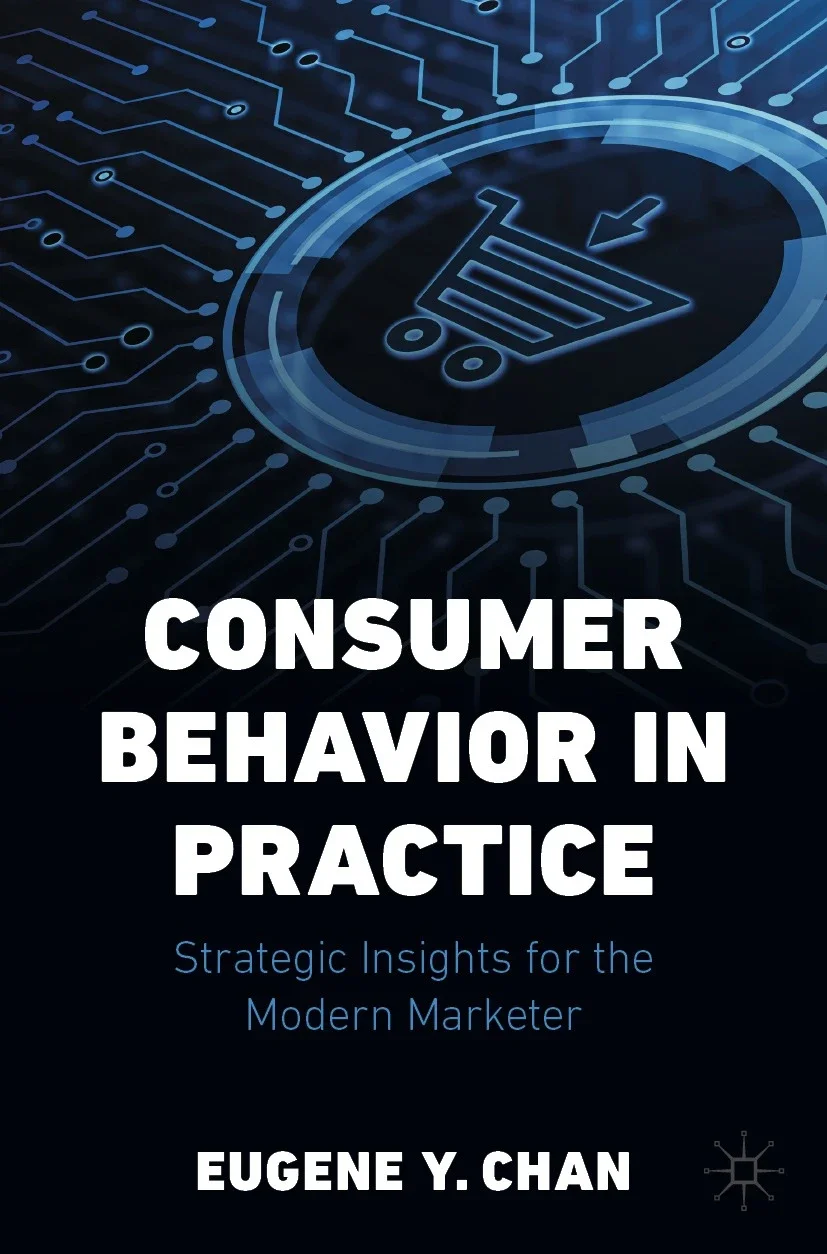
Consumer Behavior in Practice: Strategic Insights for the Modern Marketer
Palgrave Macmillan, 2024
Consumer Behavior in Practice bridges behavioral science and real-world marketing by demonstrating how consumer behavior theory can be applied to contemporary business challenges. Covering topics such as advertising, pricing, brand loyalty, digital marketing, sustainability, and brand crises, the book combines evidence-based research with practical examples to help readers better understand consumer decision-making and develop more effective marketing strategies.
-
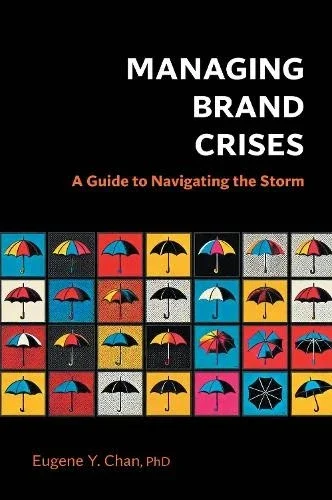
Managing Brand Crises: A Guide to Navigating the Storm
Business Expert Press, 2025
Managing Brand Crises: A Guide to Navigating the Storm provides a practical framework for anticipating, managing, and recovering from brand crises in today's fast-moving digital environment. Combining behavioral science, strategic communication, and real-world examples, the book helps marketers and business leaders understand consumer reactions, protect brand trust, and transform crises into opportunities to strengthen long-term reputation.