

STORM Framework
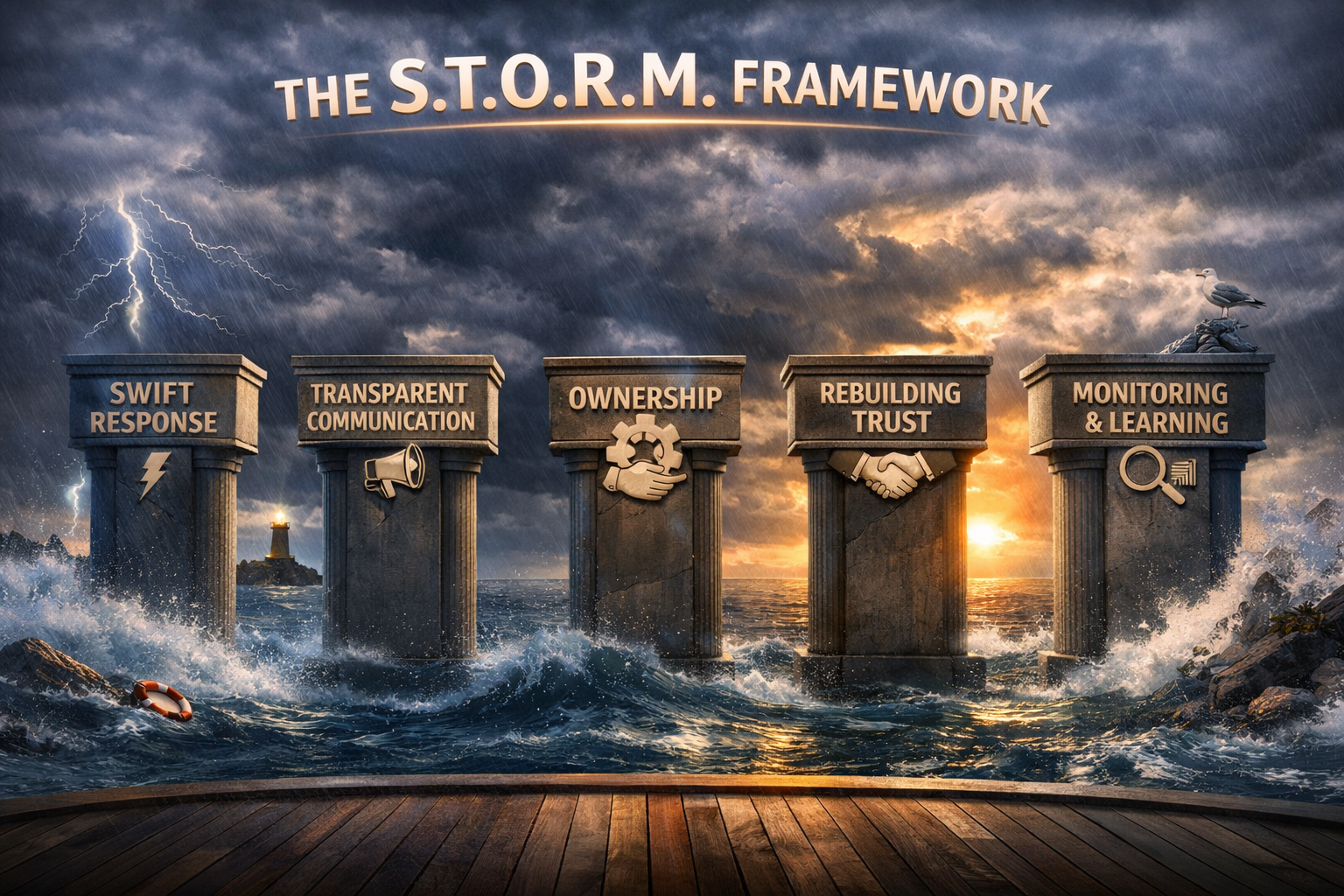
A framework that helps brands respond faster, clearer, and with the kind of accountability that rebuilds trust rather than breaks it.
The STORM Framework provides a disciplined, end‑to‑end structure for navigating brand crises in environments where reputational damage can escalate within minutes. It helps leaders move from instinctive, fragmented reactions to coordinated, strategic action—ensuring that every decision made under pressure reinforces credibility rather than erodes it. By giving organizations a clear sequence to follow, it reduces hesitation, confusion, and internal misalignment at the exact moment when clarity matters most.
It also serves as a practical lens for understanding how crises behave. Instead of treating a PR disaster as a single event, the framework maps the full lifecycle—from early signals to long‑tail recovery—so marketing and communications teams can anticipate stakeholder expectations, media dynamics, and operational vulnerabilities. This structured approach helps brands avoid the common pitfalls that turn manageable issues into reputational catastrophes, such as inconsistent messaging, delayed acknowledgement, or defensive posturing.
For practitioners responsible for protecting brand trust, the framework becomes both a diagnostic tool and a response playbook. It guides leaders in stabilizing the narrative, demonstrating accountability, rebuilding confidence, and learning from the experience so future crises are met with greater resilience. In a world where every misstep is amplified, it offers a coherent method for responding with speed, integrity, and strategic coherence—exactly what modern brand leadership demands.
The STORM Framework rests on a blend of crisis communication theory, behavioral science, and reputation‑management research, giving it a solid academic foundation rather than relying on ad‑hoc managerial intuition. It draws on established insights about how stakeholders interpret organizational behavior under pressure, how trust erodes and recovers, and how information flows through media ecosystems during periods of heightened uncertainty. This grounding ensures that the framework aligns with what scholars already know about crisis escalation, attribution, and the psychological dynamics that shape public reactions to corporate missteps. It translates those theoretical principles into a structured, practitioner‑friendly sequence that helps leaders act coherently when reputational stakes are high.
It also reflects decades of research showing that effective crisis response is not a single action but a coordinated set of behaviors that influence stakeholder perceptions over time. By integrating findings from communication theory, organizational behavior, and brand trust literature, the framework captures the full lifecycle of a crisis—from early detection to long‑tail recovery—and emphasizes the importance of credibility, consistency, and learning. In doing so, it bridges academic insight and managerial practice, giving marketing and PR professionals a method that is both theoretically sound and operationally usable.
What STORM stands for.
-
S = Swift Response
Acting quickly prevents others from defining the narrative and shows that the organization is in control. Even without full information, acknowledging the issue early reassures stakeholders and slows the spread of misinformation. Speed signals competence and care.
-
T = Transparent Communication
Clear, honest communication builds credibility when trust is most fragile. Sharing verified facts, correcting inaccuracies, and avoiding evasive language keeps stakeholders aligned with your version of events. Transparency reduces speculation and strengthens confidence in your leadership.
-
O = Ownership of the Problem
Taking responsibility demonstrates integrity and sets the foundation for recovery. A sincere apology paired with concrete corrective actions shows stakeholders that the organization understands the impact and is committed to making things right. Accountability accelerates forgiveness.
-
R = Rebuilding Trust
Trust returns through consistent, visible action over time. Following through on commitments, sharing progress updates, and engaging stakeholders directly helps repair relationships. Demonstrating improvement is more persuasive than any statement alone.
-
M = Monitoring & Learning
Effective crisis management continues long after the headlines fade. Tracking sentiment, reviewing performance, and conducting a structured post‑mortem ensures the organization learns from the experience. Turning insights into updated protocols builds long‑term resilience.
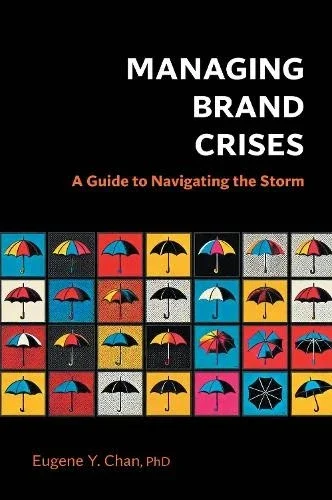
Managing Brand Crises: A Guide to Navigating the Storm
Business Expert Press, 2025
In today’s fast-paced digital world, brand crises are no longer a question of “if” but “when.” With the power of social media amplifying every misstep, a poorly timed campaign, a product recall, or a public relations blunder can quickly spiral out of control, jeopardizing a brand’s reputation and financial future. Managing Brand Crises: A Guide to Navigating the Storm equips brand managers, PR professionals, and business leaders with the tools they need to weather the storm and emerge stronger.
This insightful guide explores the critical skills required to anticipate potential pitfalls, respond swiftly and transparently, and rebuild consumer trust. From mastering stakeholder engagement to crafting strategies for reputation recovery, this book provides actionable steps for transforming crises into opportunities for growth and innovation. Packed with real-world examples and expert advice, it demonstrates that with the right preparation and response, crises can become defining moments that strengthen a brand’s identity.
Whether you’re a seasoned professional or new to the field, Managing Brand Crises is an essential resource for navigating the challenges of today’s high-stakes marketplace. Learn how to stay ahead of the curve, safeguard your brand, and turn moments of adversity into opportunities for success.