
AI Trust Dispatch
AI Trust Dispatch is a weekly newsletter for organizational leaders, risk managers, and technology teams who are watching AI deployments stall—not because the technology failed, but because the people who were supposed to use it didn't trust it. Each issue uses behavioral science to name the specific failure patterns that change management and technical or governance lenses consistently miss.
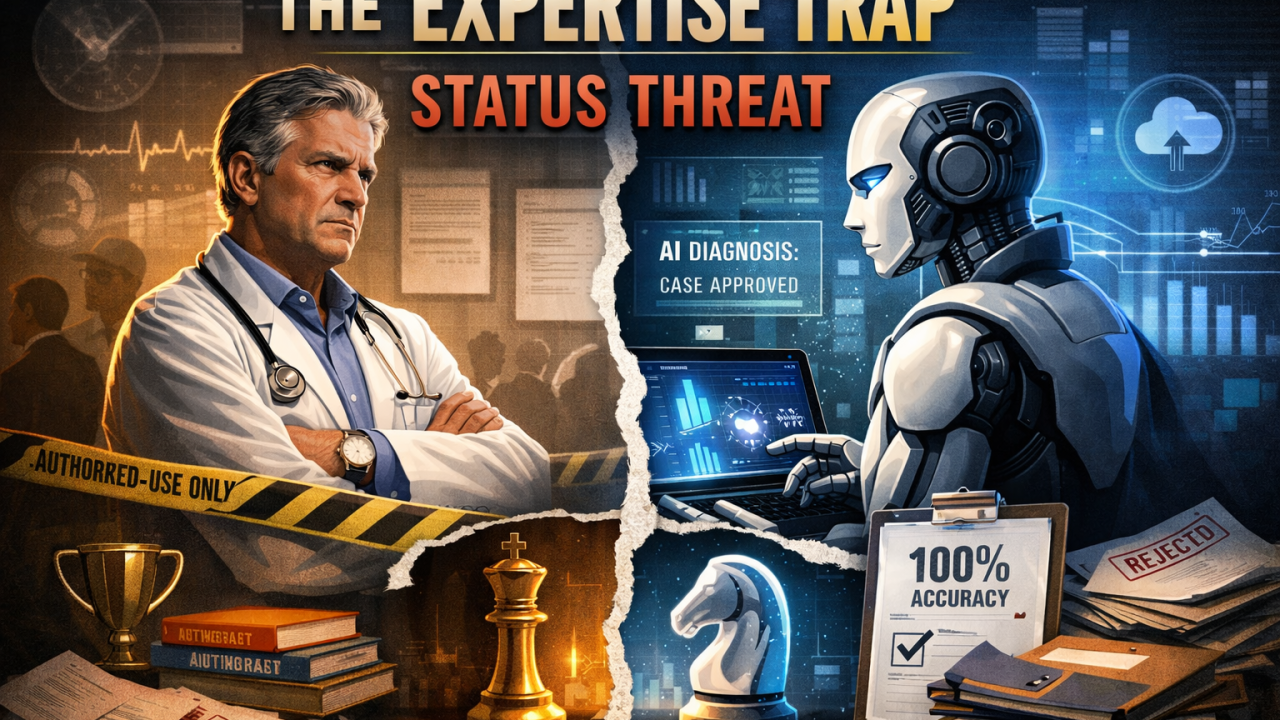
The Expert Trap: Why Your Best People Are Your Biggest AI Skeptics
When AI adoption stalls among your most senior clinical and operational staff, the instinct is to prescribe more training or better UX—but behavioral science points to a different culprit entirely. This issue examines the Expertise Trap: why high-performing experts resist AI not out of ignorance, but out of status threat, and how framing AI as a peer rather than a precision instrument triggers professional identity defense, shadow workflows, and what amounts to a multi-million dollar efficiency tax on your implementation. The issue closes with three reframing strategies that shift the organizational narrative from competition to augmentation—preserving expert authority while unlocking the adoption that better onboarding alone will never produce.
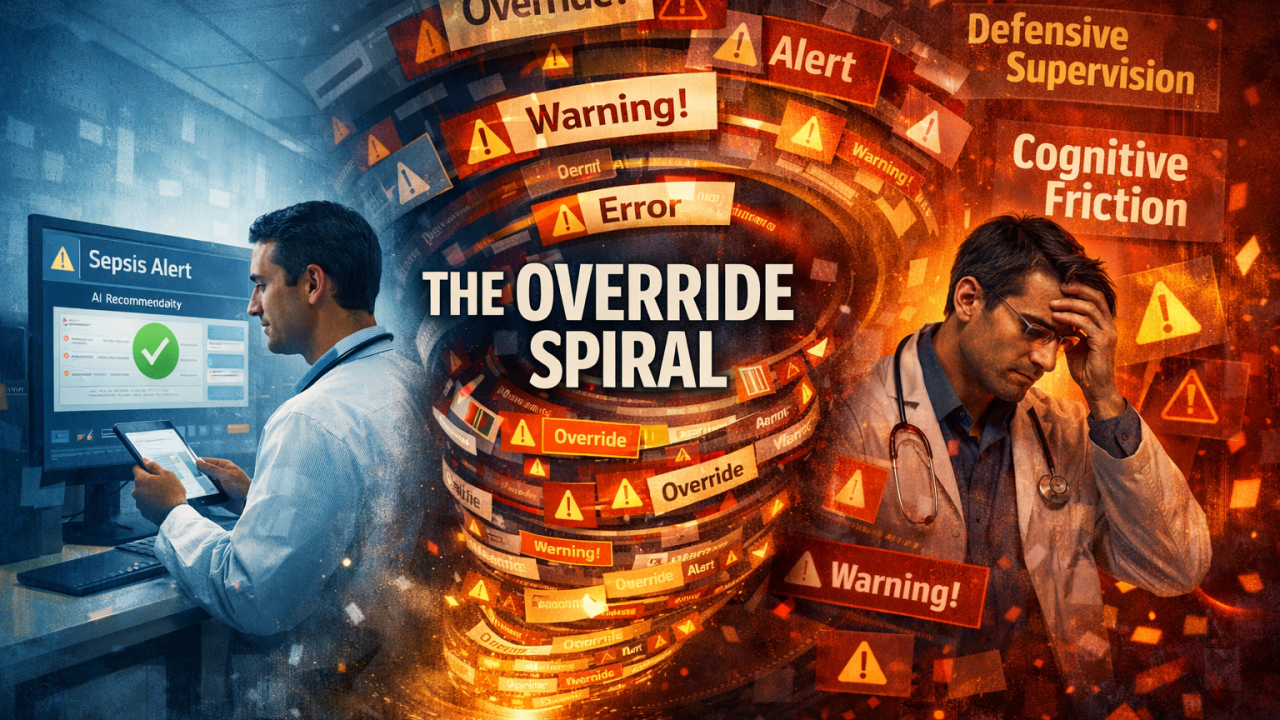
The Override Spiral: Why AI Systems Often Fail One Override at a Time
When clinicians begin quietly overriding an AI system, most organizations treat each instance as an isolated operational event—a physician who disagreed, a nurse who bypassed an alert. Behaviorally, however, override patterns are among the earliest visible signs that institutional trust is eroding, not through a single failure but through an accumulation of micro-frictions that gradually reshape how clinicians emotionally experience the technology. This issue examines the Override Spiral: how Defensive Supervision develops when AI shifts from feeling like support to feeling like something that requires constant monitoring, why workflow optimization and model accuracy alone cannot reverse this pattern, and what behavioral science reveals about restoring the conditions under which humans and AI systems can interact sustainably under real clinical pressure.